


Why Phone Calls Are So Difficult for People with Hearing Loss
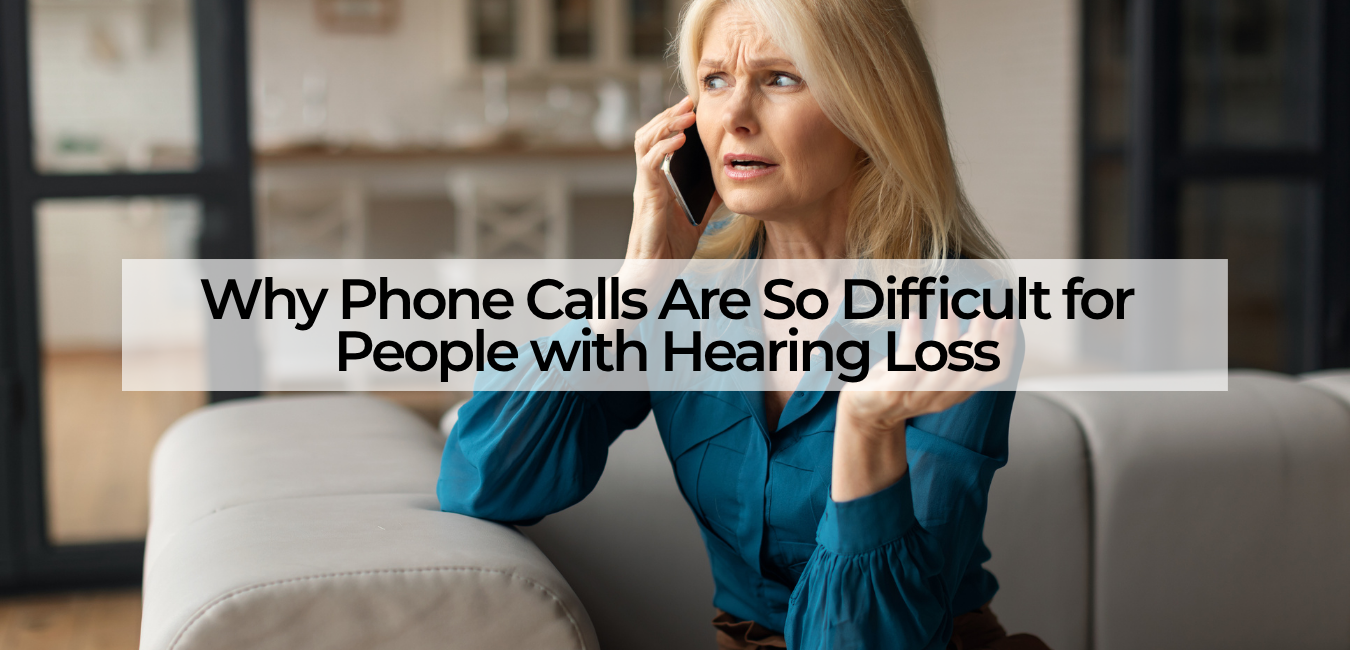
For most people, a phone call is a quick, effortless way to stay connected. But for someone living with hearing loss, even a short conversation can feel frustrating, exhausting, and genuinely hard to follow.
It’s not just about volume. Phone calls strip away many of the tools we unconsciously rely on to understand speech, and for people with hearing loss, that gap is felt immediately. If you’ve been avoiding calls, asking people to text instead, or hanging up feeling drained and uncertain about what was actually said, there are real reasons why and real solutions.
In this article, we’ll cover why hearing loss makes phone calls harder, how phone audio quality works against you, the role of visual cues, background noise, and listening fatigue, as well as practical tips to make phone conversations easier.
Key Takeaways
- Phone calls remove visual cues like lip reading and facial expressions that we rely on more than we realize
- Phone audio is compressed and limited in range, which makes certain speech sounds harder to distinguish
- Background noise from both ends of the call compounds the challenge significantly
- Hearing loss affects clarity, not just volume, and can make similar-sounding words easy to confuse
- Listening fatigue is a real and valid consequence of working harder to hear
- The right technology and a few simple adjustments can make phone calls much more manageable
Why Hearing Loss Makes Phone Calls Harder
Hearing loss isn’t just about things sounding quieter. For most people, it primarily affects clarity, like the ability to distinguish between sounds, not just hear them.
Most hearing loss begins with higher-pitched frequencies, and this matters enormously for speech. High-frequency sounds carry many of the consonants that give words their shape and meaning. Sounds like “s,” “f,” “th,” and “k.” When those frequencies are harder to hear, words start to blur together. Similar-sounding words become almost indistinguishable, and your brain is left trying to piece together meaning from incomplete information.
In a quiet room, face to face, there are enough other cues to compensate. On a phone call, those safety nets disappear, and the difficulty becomes much more pronounced.
Phone Audio Isn’t Designed for Clarity
Even for people with perfect hearing, phone audio is a compromised listening experience. To save bandwidth, phone calls compress audio and transmit only a limited frequency range, typically cutting off both the very low and very high ends of the sound spectrum.
Those missing high frequencies? They’re exactly the ones that carry the soft consonants most critical to understanding speech. Sounds like “s,” “f,” “sh,” and “th” are subtle to begin with and phone compression can make them nearly inaudible.
The result is that speech over the phone sounds different from speech in person, even when the connection is good. For someone with hearing loss, that narrowed audio range makes an already difficult task significantly harder.
No Visual Cues Means Less Understanding
Most of us don’t realize how much we lip read until we can’t. Research suggests that visual information like lip movements, facial expressions, and body language contributes meaningfully to how we process and understand speech, even for people with normal hearing.
For people with hearing loss, these visual cues become even more essential. They fill in gaps, confirm what was heard, and help the brain make sense of ambiguous sounds.
On a phone call, all of that is gone. You’re working with audio alone, in real time, with no opportunity to pause or rewind. For someone who’s hearing already requires extra effort, this is a significant added challenge, and one that’s easy for others to underestimate.
Background Noise Makes Everything Worse
On a phone call, you’re not just managing your own environment, you’re managing theirs too. Background noise from either end of the call gets picked up and transmitted, layering on top of an already compressed audio signal.
Traffic, wind, a television in another room, an open-plan office – any of these can make it significantly harder to separate speech from noise. For people with hearing loss, this signal-to-noise challenge is one of the most exhausting aspects of phone conversations. The brain works hard to focus on the voice while filtering everything else out, and over a phone call, it rarely gets a break.
Even a call that seems fine to the other person can feel overwhelming on your end.
Listening Fatigue is Real
If phone calls leave you feeling drained, that’s not an overreaction, it’s a physiological reality.
When your hearing is working at full capacity just to keep up with a conversation, your brain is doing extra processing work the entire time: filling in missing sounds, cross-referencing context, and making rapid-fire guesses about ambiguous words. This cognitive effort is exhausting in a way that’s hard to explain to someone who hasn’t experienced it.
Listening fatigue can set in quickly, especially during longer or more complex calls. It’s one of the reasons people with hearing loss often describe phone calls as extremely tiring and why avoiding them altogether can start to feel like the easier option.
Understanding this is important, both for yourself and for the people you communicate with.
Tips to Make Phone Calls Easier
There are practical ways to make phone conversations more manageable, many of which make an immediate difference:
- Use hearing aids with Bluetooth or phone-streaming — streaming audio directly from your phone to your hearing aids improves clarity significantly and cuts out a lot of the interference that comes from holding a phone to your ear
- Turn on captioning apps — apps like Google Live Transcribe, Apple’s Live Captions, or dedicated captioned telephone services provide real-time text support so you’re not relying on audio alone
- Take calls in a quiet space — reducing background noise on your end gives you the best possible chance of following the conversation clearly
- Let the caller know your needs upfront — a simple “I have some hearing loss, it helps if you speak clearly and not too fast” sets the right expectations and most people are happy to accommodate
- Don’t hesitate to ask for repetition — asking someone to repeat themselves is always better than missing important information and guessing
- Schedule important calls strategically — if listening fatigue is a factor, take calls when you’re most alert. Avoid scheduling important conversations at the end of a long, tiring day
- Consider a captioned telephone service — services like Hamilton CapTel are available to Canadians and provide real-time captions on a dedicated phone, which can be a game-changer for frequent callers
Next Steps - When It's Time to Get Support
If phone calls have started to feel consistently difficult, it’s worth paying attention to that. Struggling on the phone is often one of the first noticeable signs of hearing loss, and because the decline tends to be gradual, many people adapt around it for years before seeking help.
The right support can change things significantly. Updated hearing technology, a hearing aid program optimized for phone use, or simply a proper hearing assessment can clarify what’s happening and open up options you may not know you have.
A hearing consultation is a straightforward, no-pressure first step, and the sooner hearing loss is identified, the more effectively it can be managed.
Book a Hearing Assessment Today – Our clinicians can identify what’s making phone calls difficult and recommend the right technology and strategies to help you stay confidently connected.
References:
Davidson Hearing Aid Centres (n.d.). Hearing Loss and the Telephone; A Complicated Relationship. https://davidsonhearingaids.com/hearing-loss-telephone-complicated-relationship/
Similar Blogs

- What Level of Hearing Loss Requires a Hearing Aid?
- What to Expect at Your 4-Year Hearing Aid Appointment
- Ménière’s Disease and Hearing Loss: Symptoms, Causes, and Treatment
- Your 3-Year Hearing Aid Check-Up: Hearing, Maintenance, and Ongoing Care
- How Long Do Hearing Aid Batteries Last? A Complete Guide to Hearing Aid Battery Life
- Your 2-Year Hearing Aid Check-Up: What to Expect at Your Annual Hearing Test
- Diabetes, Blood Sugar and Hearing Health: The Role of Nutrition
- October 2026
- September 2026
- August 2026
- July 2026
- June 2026
- May 2026
- April 2026
- March 2026
- February 2026
- January 2026
- December 2025
- November 2025
- October 2025
- September 2025
- August 2025
- July 2025
- May 2025
- April 2025
- March 2025
- February 2025
- December 2024
- November 2024
- September 2024
- July 2024
- April 2024
- January 2024
- November 2023
- October 2023
- September 2023
- August 2023
- July 2023
- June 2023
- May 2023
- April 2023
- March 2023
- January 2023
- December 2022
- October 2022
- September 2022
- August 2022
- July 2022
- June 2022
- May 2022
- April 2022
- March 2022
- February 2022
- January 2022
- December 2021
- October 2021
- September 2021
- July 2021
- May 2021
- April 2021
- February 2021
- January 2021
- December 2020
- November 2020
- October 2020
- June 2020
- March 2020
- January 2020
- December 2019
- June 2019
- April 2019
- March 2019
- February 2019
- January 2019
- October 2018
- September 2018
- December 2017
- November 2017
- October 2017
- September 2017
- August 2017
- June 2017
- May 2017
- April 2017
- March 2017
- January 2017
- December 2016
- November 2016
- September 2016
- August 2016
- July 2016
- June 2016
- May 2016
- April 2016
- March 2016
- February 2016
- January 2016
- November 2015
- October 2015
- September 2015
- August 2015
- July 2015
- June 2015
- May 2015
- April 2015
- March 2015
- February 2015
- January 2015
- December 2014
- November 2014
- October 2014
- September 2014
- August 2014
- July 2014
- June 2014
- May 2014
- April 2014
- March 2014
- February 2014
- January 2014
- December 2013
- September 2013
- August 2013
- July 2013
- June 2013
- May 2013
- April 2013
- December 2012
- August 2012
- May 2012
- April 2012
- March 2012
- February 2012
- May 2011


